
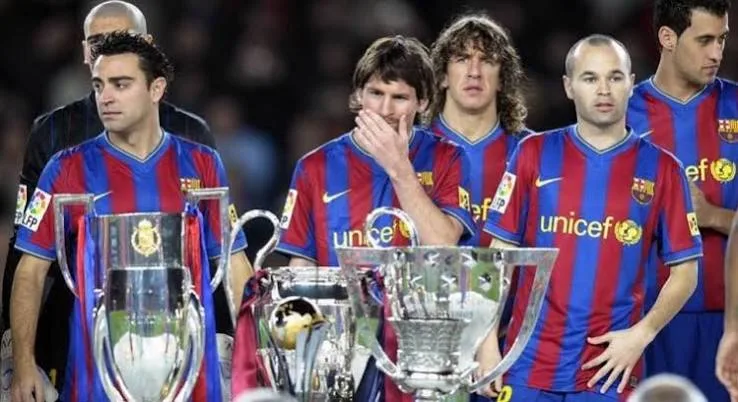
No club has quite the relationship with European football that Barcelona does. From Johan Cruyff finally ending decades of heartbreak in 1992 to Pep Guardiola’s Wembley masterclass in 2011, Barça’s Champions League history has produced several sides that didn’t just win the competition they changed the way people thought about the game.
This article ranks Barcelona’s five European Cup and Champions League-winning teams, based on their success in the competition, the quality of the squad, their playing style, and the lasting legacy each side left behind. Spoiler: the debate over the greatest of them all doesn’t end cleanly was Pep Guardiola’s 2010–11 side the greatest club team in football history? We’ll make that case, but you can judge for yourself.
5. Barcelona 1991–92: Johan Cruyff’s Dream Team
Barcelona’s First European Cup
Before 1992, Barcelona had never won Europe’s top club competition, despite decades of trying. Johan Cruyff’s “Dream Team” built around Michael Laudrup, Hristo Stoichkov, Ronald Koeman and a young Pep Guardiola in midfield finally ended that wait.
The 1992 European Cup Final
Barcelona beat Sampdoria 1-0 at Wembley in the last final before the competition was rebranded the Champions League. The game was goalless deep into extra time until Ronald Koeman struck a trademark free-kick past Gianluca Pagliuca in the 112th minute to settle it.
Why the Dream Team Changed Barcelona Forever
Cruyff’s possession-based, technically driven philosophy at Barcelona laid the tactical and cultural foundation that later evolved into tiki-taka. Without the Dream Team’s success and playing identity, the club’s later golden eras including Guardiola’s own, as both a player under Cruyff and later as a coach likely wouldn’t have taken the shape they did.
4. Barcelona 2005–06: Rijkaard’s Champions League Winners
Ronaldinho at His Peak
Ronaldinho was the best player in the world during this Barcelona side’s Champions League run, pairing his creativity with Samuel Eto’o’s finishing and Deco’s engine in midfield — while a teenage Lionel Messi was beginning to break into the picture.
The Road to the Paris Final
Frank Rijkaard’s side navigated a knockout run that tested their depth and nerve before reaching the final at the Stade de France.
Barcelona vs Arsenal in the 2006 Final
Arsenal, reduced to 10 men after Jens Lehmann’s early red card, took the lead through Sol Campbell before Barcelona’s second-half substitutions turned the game. Samuel Eto’o equalized in the 76th minute, and substitute Juliano Belletti scored the winner four minutes later, sealing a 2-1 win.
Why the 2006 Team Deserves Its Place
This side is often overshadowed by the Guardiola and MSN eras that followed, but the blend of Ronaldinho’s brilliance, Eto’o’s ruthlessness and Deco’s control produced a genuinely great European campaign and it planted the seeds for the Messi-era sides to come.
3. Barcelona 2014–15: The MSN Treble Winners
Messi, Suárez and Neymar
Lionel Messi, Luis Suárez and Neymar formed one of the most feared attacking trios the sport has seen, combining pace, finishing and creativity in a way few defenses could handle.
Barcelona’s Road to the Champions League Final
Luis Enrique’s side beat Bayern Munich in the semi-finals, with Messi’s two goals in the first leg including a mesmerizing solo strike among the standout moments of the campaign.
Barcelona vs Juventus: 2015 Champions League Final
Ivan Rakitić opened the scoring inside four minutes in Berlin, before Álvaro Morata equalized for Juventus in the 55th minute. Luis Suárez restored Barcelona’s lead in the 68th minute, and Neymar added a third deep into stoppage time to complete a 3-1 win.
The Second Treble
The win made Barcelona the first club in history to win the continental treble twice, having previously done it under Guardiola in 2009 a historic feat that cemented this MSN-era side’s place among the club’s greatest.
2. Barcelona 2008–09: Pep Guardiola’s First Great Team
Guardiola’s First Season
Guardiola took over a Barcelona side in transition and, in his very first season in charge, transformed it into treble winners an almost unprecedented feat for a rookie manager.
The Rise of Tiki-Taka
Xavi, Andrés Iniesta and Sergio Busquets formed the core of a possession-based system that would come to define an era of football, with Messi evolving into the focal point of the attack.
Barcelona’s Historic Treble
Winning La Liga, the Copa del Rey and the Champions League in the same season had never been achieved by a Spanish club before. Guardiola’s Barcelona did it in his debut campaign.
Barcelona vs Manchester United: 2009 Final
At the Stadio Olimpico in Rome, Samuel Eto’o opened the scoring in the 10th minute from an Iniesta assist, and Lionel Messi headed in a second in the 70th minute to seal a 2-0 win a goal Messi has since called his favorite of his career, describing how it “closed the circle” on the treble.
1. Barcelona 2010–11: Was This the Greatest Club Team Ever?
The Peak of Pep Guardiola’s Barcelona
By 2010–11, Guardiola’s Barcelona had evolved from the treble-winning side of two years earlier into arguably the most complete version of tiki-taka the game has seen — patient, suffocating in possession, and lethal in the final third.
Messi, Xavi and Iniesta at Their Best
Messi finished as the competition’s top scorer with 12 goals four more than any other player while Xavi and Iniesta controlled matches with a level of passing precision that redefined what midfield dominance could look like.
Barcelona’s 5–0 El Clásico Statement
Earlier that season, Barcelona thrashed José Mourinho’s Real Madrid 5-0 at Camp Nou, with goals from Xavi, Pedro, David Villa (twice) and Jeffrén a result still remembered as one of the greatest El Clásico moments in Barcelona’s history and a statement of intent for the season that followed.
Barcelona vs Manchester United — The 2011 Final
At Wembley the same stadium where Barcelona won their first European Cup in 1992 Pedro opened the scoring in the 27th minute, Wayne Rooney equalized for United, and then Messi and David Villa struck either side of the hour mark to complete a 3-1 win. Barcelona outshot United 19-4 on the night, a reflection of just how comprehensively they controlled the match.
Why the 2011 Barcelona Team Ranks Number One
This side combined total dominance of the ball with genuine attacking devastation, playing a brand of football so distinctive it’s still used as a tactical reference point today. The individual quality across the XI Messi, Xavi, Iniesta, Puyol, Piqué was matched by a coherent tactical identity that few teams before or since have managed to sustain at such a high level. Beating Manchester United twice in three years in Champions League finals, and doing so with increasing dominance each time, is exactly the kind of sustained excellence that separates a great team from an all-time great one.
Barcelona’s Greatest Champions League Teams Compared
| Rank | Team | Season | Manager | Champions League Result | Major Achievement |
| 1 | Barcelona | 2010–11 | Pep Guardiola | Winners | Dominant European campaign |
| 2 | Barcelona | 2008–09 | Pep Guardiola | Winners | Historic treble |
| 3 | Barcelona | 2014–15 | Luis Enrique | Winners | Second treble |
| 4 | Barcelona | 2005–06 | Frank Rijkaard | Winners | Ronaldinho era |
| 5 | Barcelona | 1991–92 | Johan Cruyff | Winners | First European Cup |
Which Barcelona Team Was the Best?
Barcelona 2009 vs Barcelona 2011
The 2009 side achieved the historic first treble, but the 2011 vintage played with even greater control and fluency, and its 3-1 Wembley final win over the same opponent was more emphatic than the 2-0 win in Rome two years earlier.
Barcelona 2011 vs Barcelona 2015
The 2011 team relied on positional play and midfield control through Xavi and Iniesta; the 2015 side leaned more heavily on individual brilliance up front through Messi, Suárez and Neymar. Both won the competition convincingly, but the 2011 side is generally regarded as tactically the more complete and influential of the two.
Barcelona 1992 vs Pep Guardiola’s Barcelona
Cruyff’s 1992 Dream Team was foundational it established Barcelona’s attacking, possession-based identity and directly influenced Guardiola both as a player in that side and later as a manager. Guardiola’s own teams took that same philosophy and executed it with even greater precision and success, but they were building on the platform Cruyff created.
Barcelona’s Champions League Legacy
Barcelona’s influence on European football goes well beyond trophies. Cruyff’s football philosophy, first instilled as a player in the 1970s and later as Dream Team coach, planted the seed for a possession-based style that Guardiola would eventually perfect. La Masia, the club’s academy, produced the core of both the 2009 and 2011 sides Messi, Xavi, Iniesta, Busquets and Puyol among them proving that homegrown talent could form the backbone of a team capable of dominating the continent. Guardiola’s tactical innovations at Barcelona went on to influence a generation of coaches across world football, and the club’s Champions League successes across five different decades stand as a rare case of sustained excellence at the highest level of the sport.
Frequently Asked Questions
What is Barcelona’s greatest Champions League team? Based on dominance, playing style and historical influence, the 2010–11 Pep Guardiola side ranks as Barcelona’s greatest Champions League team.
How many Champions League titles has Barcelona won? Barcelona have won the competition five times: 1992, 2006, 2009, 2011 and 2015.
Was Barcelona 2011 the greatest team of all time? It’s widely considered one of the greatest club sides in football history, though “greatest ever” is ultimately a matter of debate given the different eras, styles and competitions involved.
Which Barcelona team won the treble? Barcelona won the treble (league, domestic cup and Champions League) twice in 2008–09 under Pep Guardiola and again in 2014–15 under Luis Enrique.
Who managed Barcelona’s 2009 Champions League-winning team? Pep Guardiola, in his first season as first-team manager.
Who played in Barcelona’s 2011 Champions League final? Barcelona’s starting XI included Víctor Valdés, Éric Abidal, Gerard Piqué, Javier Mascherano, Dani Alves, Sergio Busquets, Xavi, Andrés Iniesta, Pedro, David Villa and Lionel Messi.
Was Barcelona 2015 better than Barcelona 2011? Most assessments favor the 2011 side for its tactical control and influence on the game, though the 2015 team’s front three of Messi, Suárez and Neymar remains one of the most feared attacking trios ever assembled.
Which Barcelona team won their first European Cup? Johan Cruyff’s Dream Team, who beat Sampdoria 1-0 at Wembley in 1992.
Conclusion
Ranking Barcelona’s greatest Champions League teams inevitably comes down to what you value most total dominance, historic firsts, or sheer attacking spectacle. Cruyff’s Dream Team made history simply by winning; Guardiola’s 2011 side made history by making it look effortless. Whichever era you rate highest, Barcelona’s five European triumphs across five different decades represent one of the most sustained runs of excellence in football history and with a new generation forming around Lamine Yamal, the next great Barça European campaign may not be too far away.