
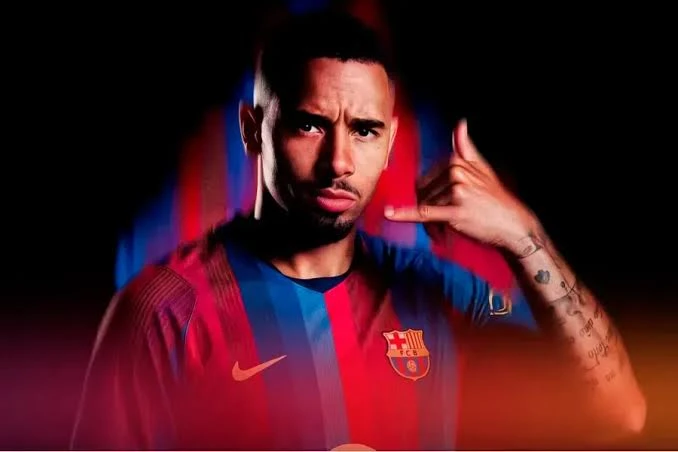
Gabriel Jesus has officially joined Barcelona. The Brazilian forward arrived from Arsenal on deadline day, signing a contract that runs until June 2029. The move gives Hansi Flick a recognized center-forward option after Barça spent much of the summer without one following the departures of Robert Lewandowski and Ferran Torres.
For a club that spent most of the transfer window chasing Julián Álvarez without success, the late swoop for Jesus was, in Flick’s own words, a pleasant surprise. Here’s everything confirmed so far about the deal, what Jesus brings to the squad, and what it means for Barcelona’s attack going forward.
Gabriel Jesus Signs for Barcelona
The transfer was completed on deadline day, closing out a chaotic final 24 hours of Barcelona’s summer window. Jesus becomes the club’s seventh signing of the summer, joining a group that includes Anthony Gordon, Karim Adeyemi, Rodri, João Cancelo and Dominik Livaković.
When Did Gabriel Jesus Join Barcelona?
Jesus arrived in Barcelona and underwent a medical before the transfer was finalized on deadline day, September 1, 2026. He watched Barça’s 5–2 win over Rayo Vallecano from the stands at Camp Nou the day before, then completed the paperwork the following day as the window closed.
How Long Is Gabriel Jesus’ Barcelona Contract?
Jesus has signed through June 2029, giving him roughly three seasons at the club.
How Much Did Barcelona Pay for Gabriel Jesus?
Barcelona paid Arsenal an initial fee of around €10 million (roughly £8.6m / $11.6m), with a further €4 million reportedly available in performance-related add-ons.
Gabriel Jesus Barcelona Contract Details
| Detail | Information |
| Player | Gabriel Jesus |
| Previous Club | Arsenal |
| New Club | Barcelona |
| Position | Forward |
| Contract | Until June 2029 |
| Transfer Fee | Around €10 million (plus add-ons) |
| Nationality | Brazilian |
| Age | 29 |
| Shirt Number | 9 |
Why Did Barcelona Sign Gabriel Jesus?
Barcelona spent the summer trying to land Julián Álvarez, but Atlético Madrid refused to negotiate. With Lewandowski and Torres both gone, Barça went into the season with no recognized No. 9, and it was Raphinha nominally a winger filling in as an emergency striker. He did it well enough, scoring five goals in Barcelona’s first three league games, but it left the squad thin up front heading into a long season across multiple competitions.
Jesus offered a lower-cost, lower-risk solution. He’s played under Pep Guardiola at Manchester City, so he’s familiar with the kind of positional, possession-based football Flick wants. He can play as a central striker or drift wide, he presses aggressively, and he combines well in tight spaces rather than needing to play off the shoulder of the last defender. A source described the move as a “market opportunity” once the Álvarez deal stalled — Jesus was available, experienced, and could be signed quickly before the deadline.
Flick made his admiration clear after the deal was struck: he called Jesus’s style of play a good fit for the team and said sporting director Deco had done excellent work getting the deal over the line.
Gabriel Jesus’ Career Before Barcelona
Gabriel Jesus at Palmeiras
Jesus came through Palmeiras’ youth setup after starting out in street football and amateur clubs in his native São Paulo. He broke into the first team in 2015, and by 2016 he had established himself as one of Brazilian football’s brightest young talents scoring around 28 goals in roughly 83 appearances across his two full seasons, winning the Copa do Brasil in 2015 and the Campeonato Brasileiro Série A title in 2016, a season in which he was named the league’s best newcomer.
Gabriel Jesus at Manchester City
City signed Jesus from Palmeiras in August 2016 for a fee reported around £27 million, and he joined up with the squad in January 2017. Over five and a half years under Pep Guardiola, Jesus became a key part of one of the most dominant sides in Premier League history. Barcelona’s official profile of the player records 236 appearances, 95 goals and 45 assists for Manchester City. During that spell he won four Premier League titles, an FA Cup and three EFL Cups, while developing from a straightforward penalty-box finisher into a more complete, all-around forward capable of playing across the front line.
Gabriel Jesus at Arsenal
Jesus moved to Arsenal in the summer of 2022 for a fee reported around £45 million, arriving as Mikel Arteta’s first-choice center-forward. He scored 11 goals in 33 games in his debut season and was a regular fixture in the side that pushed City close in the Premier League title race. Injuries increasingly disrupted his Arsenal career, though, most seriously an ACL injury suffered in January 2025 that ruled him out for the majority of that campaign. He returned to fitness and was part of Arsenal’s Premier League-winning squad, but by his final season he had fallen behind Kai Havertz and Viktor Gyökeres in the pecking order. He leaves Arsenal with 32 goals in 123 appearances across all competitions, according to Sky Sports.
Gabriel Jesus’ Playing Style
Is Gabriel Jesus a Number 9?
He can play as an out-and-out striker, but he’s never been a purely stationary target man. Jesus likes to drop deep to link play, drift into wide channels, and create space for runners rather than simply waiting on the shoulder of the last defender.
Can Gabriel Jesus Play on the Wing?
Yes. Across his career at City and Arsenal, Jesus has regularly been used on the right wing as well as through the middle, which gives Flick flexibility in how he’s deployed alongside Barcelona’s other attackers.
How Does Gabriel Jesus Fit Hansi Flick’s System?
Flick’s Barcelona relies on intense pressing, quick combination play and positional interchange in the final third all things Jesus was drilled in during his years under Guardiola at City. His movement off the ball, his willingness to press from the front, and his comfort combining in tight areas make him a more natural fit for that system than a traditional target man would be.
Gabriel Jesus vs Barcelona’s Other Attacking Options
| Player | Position | Strength |
| Gabriel Jesus | Forward | Versatility & pressing |
| Raphinha | Winger | Chance creation |
| Lamine Yamal | Winger | Dribbling & creativity |
| Other Barça forwards | — | — |
Jesus’s arrival isn’t about replacing any one player — it’s about giving Flick a recognized center-forward option so Raphinha and Yamal can operate from wider positions rather than being asked to fill in centrally.
Gabriel Jesus and the Julián Álvarez Question
Is Gabriel Jesus Barcelona’s Alternative to Julián Álvarez?
Not exactly, according to reporting from Sky Sports, which described the two situations as completely separate. Jesus was signed largely because Atlético Madrid refused to do business on Álvarez, but the club’s interest in the Argentine hasn’t disappeared.
Could Barcelona Still Sign Julián Álvarez?
Sources have indicated Barcelona remain interested in Álvarez for the future, even after landing Jesus. Nothing is imminent, since Atlético has shown no willingness to sell, but it’s a storyline worth watching in future transfer windows.
What Gabriel Jesus Can Bring to Barcelona
Experience at the Highest Level
Jesus arrives with Premier League title-winning experience from both City and Arsenal, along with senior Brazil international caps and a Copa América win in 2019.
Attacking Versatility
He can play centrally or from the wing, giving Flick multiple ways to use him within the same system.
Pressing and Work Rate
Guardiola-trained pressing habits make him a natural fit for Flick’s demands out of possession.
Goal Contribution
Even accounting for injury-hit seasons at Arsenal, his underlying numbers at City in particular show a proven record of goals and assists at the top level.
Competition for Places
His arrival adds depth and competition up front, which should raise standards across Barcelona’s attack over a long season.
Gabriel Jesus Barcelona Debut
Jesus arrived just after Barcelona’s win over Rayo Vallecano, so his debut is still to come as of this writing. This section will be updated with his first appearance, minutes played, goals, assists and Hansi Flick’s post-match comments once available.
Gabriel Jesus Barcelona: Key Facts
Is Gabriel Jesus a Barcelona player? Yes, he officially joined the club on transfer deadline day, September 1, 2026, from Arsenal.
When does Gabriel Jesus’ Barcelona contract end? His contract runs until June 2029.
How much did Barcelona pay for Gabriel Jesus? An initial fee of around €10 million, with up to €4 million more in performance-related add-ons.
What position does Gabriel Jesus play? Primarily a forward, he can play as a central striker or on the wing.
How old is Gabriel Jesus? He’s 29 years old, born April 3, 1997.
Why did Gabriel Jesus leave Arsenal? Injuries, including a serious ACL injury in January 2025, disrupted his time at Arsenal, and he had fallen behind Kai Havertz and Viktor Gyökeres in the squad’s pecking order by his final season.
Can Gabriel Jesus play as a winger? Yes, he has regular experience playing out wide as well as through the middle.
Will Gabriel Jesus replace Lewandowski? He fills the No. 9 void Lewandowski’s departure left, but he brings a different profile more mobile and combination-focused than a classic penalty-box poacher rather than a like-for-like replacement.
Conclusion
Gabriel Jesus’s move to Barcelona closes out a summer in which the club spent months chasing a marquee striker signing and, in the end, found its answer late and relatively cheaply. He isn’t a direct replacement for Robert Lewandowski’s goal-scoring profile, but his pressing, versatility and experience in Guardiola-style systems make him a sensible fit for what Hansi Flick is building. Whether he becomes a regular starter or a rotation option behind Raphinha and Lamine Yamal will depend on form and fitness in the weeks ahead and with the Julián Álvarez interest still lingering in the background, this may not be the last word on Barcelona’s center-forward situation. For now, all eyes turn to his first appearance in Blaugrana.