
Introduction
Lionel Messi’s departure from FC Barcelona in August 2021 remains one of the most shocking moments in football history. After spending 21 years at the club, winning countless trophies, and becoming Barcelona’s all-time leading scorer, many believed he would retire wearing the Blaugrana shirt.
Yet despite both Messi and Barcelona agreeing to a new contract, the deal ultimately collapsed. Financial difficulties, La Liga’s salary regulations, and years of poor financial management created a situation where the club could no longer register its greatest player.
In this guide, we explain why Lionel Messi left Barcelona, what really happened behind the scenes, and how the decision changed the future of both the player and the club.
Table of Contents
- Messi’s New Contract Agreement
- Barcelona’s Financial Crisis
- La Liga Salary Cap Rules
- Why Barcelona Couldn’t Register Messi
- The CVC Deal Explained
- Messi’s Emotional Farewell
- Move to Paris Saint-Germain
- How Barcelona Has Recovered
- Frequently Asked Questions
Did Lionel Messi Want to Leave Barcelona?
No.
One of the biggest misconceptions is that Messi chose to leave the club.
In reality:
- Messi wanted to stay.
- Barcelona wanted him to stay.
- Both parties agreed to a new contract, including a significant salary reduction.
However, agreeing on a contract was only one part of the process. Barcelona still had to comply with La Liga’s financial regulations before the player could be registered.
Key Takeaway: The issue was not willingness—it was the club’s financial and regulatory situation.
Barcelona’s Financial Crisis
Barcelona’s financial problems had been building for years before Messi’s departure.
Major Factors
- Rising wage bill
- Expensive player transfers
- High player salaries
- Financial losses during the COVID-19 pandemic
- Long-term debt and cash flow issues
The club entered the 2021 season under severe financial pressure, limiting its ability to register new contracts.
La Liga’s Salary Cap Rules Explained
A major reason Messi could not remain at Barcelona was La Liga’s salary cap system.
How It Worked
La Liga sets spending limits based on each club’s financial health.
These limits cover:
- Player wages
- Coaching staff salaries
- Transfer amortization
- Other football-related expenses
Barcelona’s wage bill exceeded the permitted limit, preventing the club from registering Messi’s new contract.
Why Couldn’t Barcelona Register Messi?
Even after Messi reportedly accepted a substantial pay cut, Barcelona still could not complete the registration.
The reasons included:
- Existing wage commitments
- Reduced club revenues
- Financial losses
- Salary cap restrictions
Under La Liga rules, registering the new contract would have exceeded the club’s allowed spending limit.
The CVC Deal and Barcelona’s Decision
Around the same time, La Liga proposed an investment agreement with CVC Capital Partners.
The deal would have provided Barcelona with significant funding but required clubs to give up a share of future commercial revenue over several decades.
Barcelona chose not to accept the agreement, arguing it would compromise the club’s long-term financial interests.
Without that additional financial flexibility, registering Messi became even more difficult.
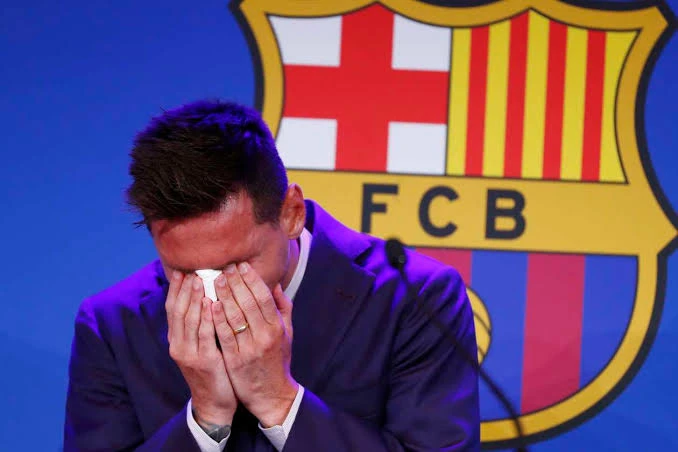
Messi’s Emotional Farewell
Messi announced his departure during an emotional press conference.
He expressed his desire to stay and thanked teammates, staff, and supporters for their support throughout his career.
The farewell marked the end of more than two decades at Barcelona.
Why Did Messi Join Paris Saint-Germain?
After leaving Barcelona, Messi signed with Paris Saint-Germain (PSG).
PSG could complete the transfer because the club had the financial capacity to register him under its domestic league regulations.
The move allowed Messi to continue competing at the highest level while Barcelona focused on rebuilding.
How Barcelona Has Recovered Since Messi’s Exit
Although losing Messi was a major setback, Barcelona has gradually rebuilt.
Key developments include:
- Investment in young talents like Lamine Yamal and Pau Cubarsí
- Greater reliance on La Masia
- Improved financial management
- Ongoing Spotify Camp Nou redevelopment
- Progress toward a more sustainable wage structure
The club has shifted its focus toward long-term stability while remaining competitive.
Common Myths About Messi Leaving Barcelona
Myth: Messi left because he wanted a new challenge.
Fact: Messi publicly stated he wanted to stay.
Myth: Barcelona refused to renew his contract.
Fact: Both sides reached an agreement, but registration rules prevented it.
Myth: Messi could have played for free.
Fact: Spanish labor regulations and league registration rules meant he could not simply play without a compliant contract.
Frequently Asked Questions
Why did Lionel Messi leave Barcelona?
Because Barcelona could not register his new contract due to financial difficulties and La Liga’s salary cap regulations.
Did Messi want to leave Barcelona?
No. Messi repeatedly expressed his desire to remain at the club.
Did Messi accept a pay cut?
Yes. Reports at the time indicated he agreed to a significant reduction in salary as part of the proposed renewal.
Why did Barcelona reject the CVC deal?
The club believed the long-term commercial commitments were not in its best interests.
Where did Messi go after leaving Barcelona?
He joined Paris Saint-Germain before later moving to Inter Miami.
Conclusion
Lionel Messi’s departure from Barcelona was not the result of a disagreement between the player and the club. Instead, it was the culmination of years of financial challenges, strict La Liga regulations, and circumstances that prevented Barcelona from registering a new contract despite mutual agreement.
While his exit ended one of football’s greatest partnerships, it also marked the beginning of Barcelona’s rebuilding phase. Today, the club is focused on financial stability, developing young talent, and creating a new era built around the next generation of stars.