
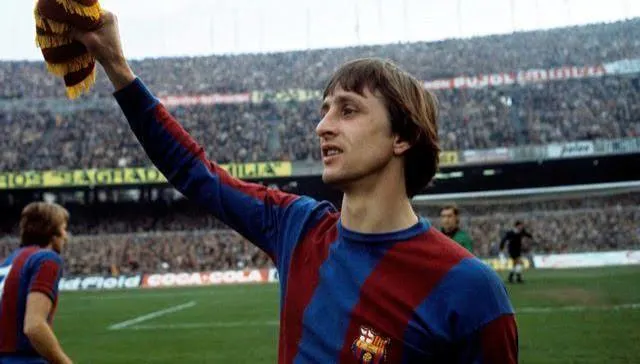
Johan Cruyff did not simply play for Barcelona or manage Barcelona. He helped shape what Barcelona would become.
No single figure looms larger over Barcelona’s modern identity than Johan Cruyff. He arrived at Camp Nou twice first as a world-record signing who ended a 14-year title drought, and later as the manager who built the club’s first true European champion. In between, he shaped a footballing philosophy built on possession, technical ability, and attacking intent that Barcelona still identifies with today.
This article traces Cruyff’s Barcelona story across three phases Cruyff the player, Cruyff the manager, and Cruyff the influencer to explain why he remains one of the most important figures in the club’s history.
Who Was Johan Cruyff?
Johan Cruyff was a Dutch footballing legend who rose through Ajax’s youth system to become the embodiment of Total Football, the fluid, possession-based style developed under coach Rinus Michels in which players interchanged positions across the pitch. By the time Barcelona signed him in 1973 for a then-world-record fee, Cruyff had already won multiple Eredivisie titles and three straight European Cups with Ajax, and was regarded as the best player in the world.
Johan Cruyff’s Playing Career at Barcelona
When Did Johan Cruyff Join Barcelona?
Cruyff signed for Barcelona from Ajax in August 1973, and his arrival was treated as a seismic event both on and off the pitch. Barcelona hadn’t won the Spanish league title in 14 years, and Cruyff nicknamed “El Salvador” by fans was expected to end that drought immediately.
Cruyff’s Playing Style at Barcelona
Cruyff’s game reflected the core ideas of Total Football: intelligent movement, quick and precise passing, tactical awareness, and the vision to read a match several moves ahead of everyone else on the pitch. He wasn’t simply a gifted individual talent he organized and directed teammates around him, effectively acting as an on-field extension of his coach.
Cruyff’s Greatest Moments as a Barcelona Player
Cruyff delivered immediately, leading Barcelona to the 1973–74 La Liga title in his debut season. The campaign’s defining moment came in a 5–0 demolition of Real Madrid at the Santiago Bernabéu, a result still remembered as one of the greatest results in Barcelona’s history and one that cemented Cruyff’s status among Barcelona fans for good.
Johan Cruyff’s Trophies at Barcelona
As a player, Cruyff won the 1973–74 La Liga title and the 1977–78 Copa del Rey during his five seasons at the club. The numbers alone understate his impact: ending a 14-year wait for a league title, in his first season, transformed Barcelona’s self-belief and reestablished the club as a genuine force in Spanish football after over a decade in Real Madrid’s shadow.
Cruyff’s Return to Barcelona as Manager
When Did Cruyff Become Barcelona Manager?
Cruyff returned to Camp Nou in 1988, this time as head coach, arriving from Ajax where he had already begun building a reputation as an innovative tactical thinker. His eight years in charge, from 1988 to 1996, would go on to redefine the club far beyond what he had achieved as a player.
Cruyff’s Football Philosophy
As manager, Cruyff built his Barcelona side around a clear set of principles: dominating possession, building attacks from the back through technically gifted defenders and midfielders, pressing intelligently to win the ball back quickly, and using positional awareness to consistently create space. Football, in Cruyff’s view, was as much about controlling the ball as it was about scoring goals a philosophy that would go on to define Barcelona’s identity for decades.
The Barcelona Dream Team
Cruyff’s Barcelona side of the early 1990s became known as the Dream Team, built around players like Pep Guardiola, Michael Laudrup, Ronald Koeman, and Hristo Stoichkov. The team combined technical quality with the positional structure and possession principles Cruyff had been developing since his Ajax days, and it dominated Spanish football for several seasons while also breaking new ground in Europe.
Barcelona’s First European Cup
The Dream Team’s defining achievement came in 1992, when Barcelona won the European Cup for the first time in the club’s history, beating Sampdoria in the final at Wembley. It remains one of the most significant moments in Barcelona’s history, not just because of the trophy itself, but because it validated the attacking, possession-based approach Cruyff had built the team around.
Johan Cruyff and La Masia
Cruyff’s influence extended well beyond first-team results. He placed significant emphasis on developing technically gifted players through Barcelona’s youth academy, La Masia, insisting that young players be coached in the same possession-based principles and tactical intelligence used by the first team. This created a genuine pathway from the academy to senior football, rather than treating youth development as a separate track from the club’s philosophy.
Cruyff didn’t personally build every part of La Masia’s later success, but his emphasis on technical education and tactical understanding for young players became an important foundation for the identity Barcelona’s academy is known for today a line that runs from Cruyff through Guardiola, Xavi, Iniesta, and Messi.
Cruyff’s Influence on Pep Guardiola
One of Cruyff’s most significant legacies is his direct influence on Pep Guardiola, who played as a defensive midfielder under Cruyff in the Dream Team. Guardiola absorbed Cruyff’s ideas about possession, positional play, and building attacks from the back, and later built his own trophy-laden Barcelona side around many of the same principles. The two teams Cruyff’s Dream Team and Guardiola’s treble winners shared a clear philosophical thread, even two decades apart.
How Cruyff Changed Barcelona’s Identity
From Results to Playing Philosophy
Before Cruyff, Barcelona’s ambitions were largely measured in trophies alone. Cruyff introduced the idea that how the club won mattered as much as whether it won, embedding a specific style of football into the club’s broader identity.
Importance of Possession
Controlling the ball became central to Cruyff’s Barcelona, both as a tactical tool and as a statement of footballing philosophy a principle that would go on to define the club’s approach for generations of players and coaches.
Trust in Young Players
Cruyff was willing to give young, technically gifted players including a young Guardiola genuine first-team opportunities, reinforcing the idea that La Masia graduates belonged on the biggest stages rather than serving purely as squad depth.
Attacking Football
Cruyff consistently favored proactive, attacking football over cautious or purely reactive approaches, a preference that has remained closely associated with Barcelona’s identity ever since.
Johan Cruyff’s Biggest Contributions to Barcelona
- Ended a 14-year La Liga title drought as a player in his debut season
- Built the Dream Team, one of the most influential sides in football history
- Delivered Barcelona’s first-ever European Cup in 1992
- Embedded possession-based, attacking football as part of the club’s core identity
- Elevated the role of La Masia in developing technically gifted young players
- Directly influenced Pep Guardiola, shaping decades of Barcelona’s footballing philosophy
Johan Cruyff vs Other Barcelona Legends
Comparing Cruyff to players like Messi, Xavi, or Iniesta requires a different lens than a typical head-to-head, because his impact operated on a different level. Messi defined Barcelona’s success on the pitch, breaking records and delivering trophies as arguably the greatest individual player in the club’s history. Cruyff, by contrast, helped define the football philosophy behind the club the framework within which players like Xavi, Iniesta, and eventually Messi were developed and coached.
Why Is Johan Cruyff So Important to Barcelona?
Cruyff’s importance to Barcelona spans his entire relationship with the club: a playing career that ended over a decade without a league title, a managerial career that delivered the club’s first European Cup and the influential Dream Team, a footballing philosophy built on possession and attacking intent, and a lasting influence on La Masia’s approach to developing young players. Few figures in football history have shaped a single club’s identity as completely as Cruyff shaped Barcelona’s.
Johan Cruyff’s Legacy at Barcelona
Cruyff’s legacy at Barcelona isn’t fully captured by goals, matches, or even trophies. His greater legacy is the footballing philosophy he left behind one that runs directly through Guardiola, Xavi, Iniesta, and Messi, and through Barcelona’s decades-long identity as a possession-based, attacking football club built around technical ability and academy development.
Cruyff’s greatest achievement at Barcelona wasn’t just winning trophies. It was giving the club a footballing identity that generations could inherit.
Frequently Asked Questions
Who was Johan Cruyff at Barcelona? Johan Cruyff was a legendary Barcelona player (1973–1978) and later head coach (1988–1996), who played a defining role in shaping the club’s football philosophy and identity.
How many trophies did Johan Cruyff win with Barcelona? As a player, Cruyff won the 1973–74 La Liga title and the 1977–78 Copa del Rey. As manager, he won four consecutive La Liga titles, the 1991–92 European Cup, the 1989 Cup Winners’ Cup, and other domestic honours.
Did Johan Cruyff play for Barcelona? Yes. Cruyff played for Barcelona from 1973 to 1978, making 231 appearances and scoring 86 goals.
When did Johan Cruyff manage Barcelona? Cruyff managed Barcelona from 1988 to 1996, a period that included the Dream Team era and the club’s first European Cup title.
What was Cruyff’s philosophy at Barcelona? Cruyff’s philosophy centered on possession, attacking football, technical ability, positional intelligence, and building attacks from the back.
What was Barcelona’s Dream Team? The Dream Team was Cruyff’s Barcelona side of the early 1990s, built around players like Guardiola, Laudrup, Koeman, and Stoichkov, which won Barcelona’s first European Cup in 1992 alongside four consecutive league titles.
How did Cruyff influence La Masia? Cruyff emphasized technical education and tactical intelligence for young players at La Masia, helping create a genuine pathway from the academy to the first team that later generations built upon.
Did Cruyff influence Pep Guardiola? Yes. Guardiola played under Cruyff in the Dream Team and absorbed his ideas on possession and positional play, later building his own Barcelona side around many of the same principles.
Why is Johan Cruyff important to Barcelona? Cruyff is important to Barcelona because he shaped the club both as a player and manager, establishing a football philosophy and youth development approach that continues to define the club’s identity today.
Conclusion
Johan Cruyff’s relationship with Barcelona spans two distinct careers, but one continuous idea: that Barcelona should play football on its own terms, built on possession, intelligence, and technical ability rather than results alone. As a player, he ended over a decade of frustration and reestablished Barcelona as a genuine force in Spanish football. As a manager, he built the Dream Team and delivered the club’s first European Cup, while laying the philosophical groundwork that La Masia and future coaches like Guardiola would build on for decades. Cruyff didn’t just leave Barcelona with trophies he left the club with an identity, and that identity is still visible in the way Barcelona plays football today.